
Spring Produce Guide for Commercial Kitchens: What’s in Season in Sydney
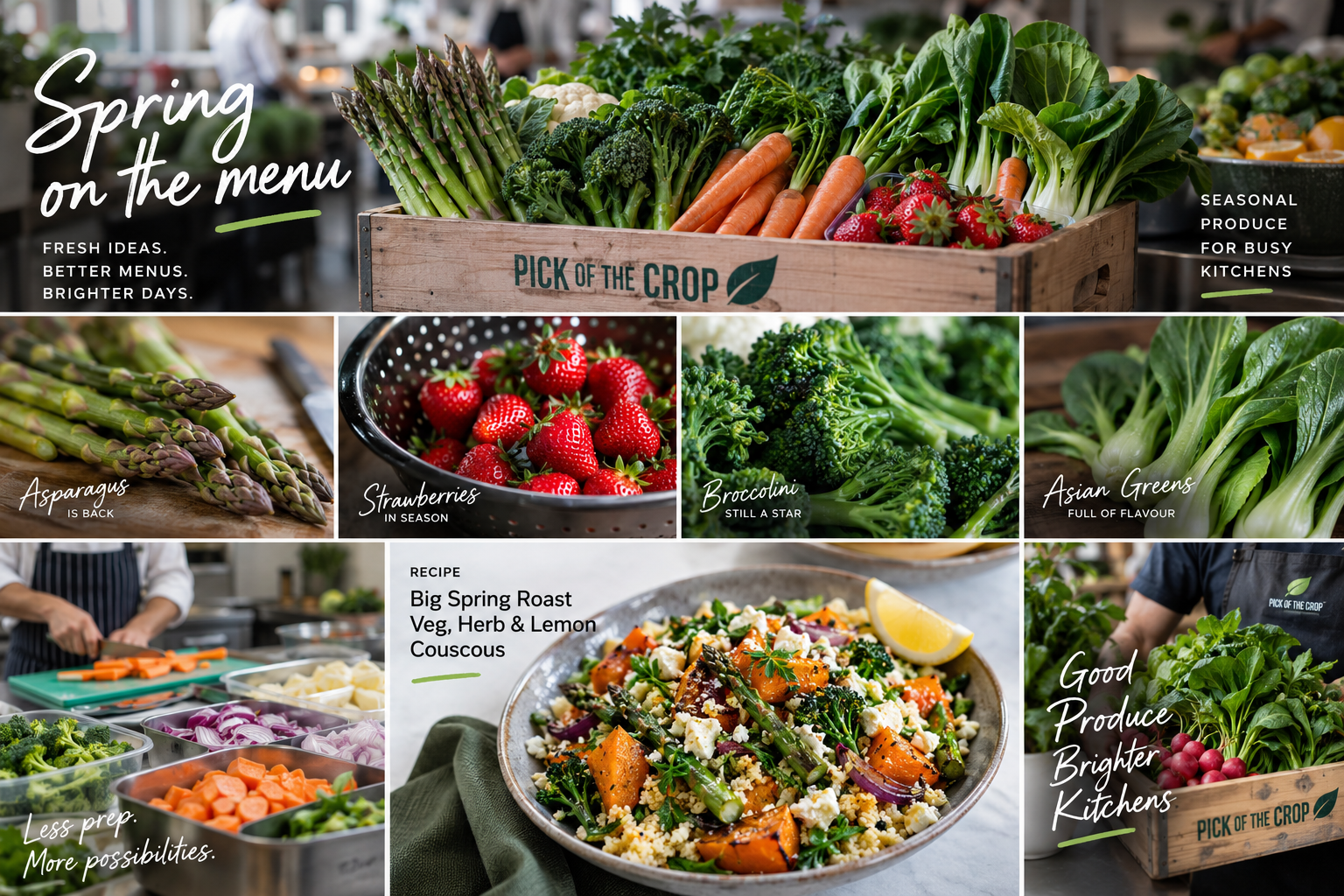
Spring has officially arrived in Sydney.
The days are getting longer, the jackets are coming off and, more importantly for anyone running a commercial kitchen, the produce market is starting to look a whole lot more interesting.
September is one of those brilliant crossover months where some of winter's best performers are still hanging around while the first proper signs of spring start appearing.
Asparagus is back. Strawberries are looking good. Broccolini is having a moment. Asian greens are plentiful. And over the next few months we'll start seeing the arrival of the produce that makes Australian spring and summer menus so good.
But knowing what's in season isn't just useful trivia for chefs. It can help you build better menus, buy smarter, reduce unnecessary costs and make the most of fruit and vegetables when they're actually worth putting on the plate.
So, here's what Sydney commercial kitchens should have their eye on this spring.
First things first: why should a commercial kitchen care what's in season?
Because strawberries in September and strawberries in the middle of winter are not the same proposition. Neither are tomatoes. Or asparagus. Or mangoes.
Technically, we can get an enormous range of fresh produce almost year-round in Australia. That doesn't mean every product is at its best, or best value, every month of the year.
When supply increases, you can often get better quality, more choice and better buying opportunities. And when you're ordering boxes rather than bunches, those differences matter.
That's why good seasonal menu planning isn't about being trendy. It's good kitchen economics.
So, what's good in Sydney this September?
We're currently in the crossover period, which means you've still got plenty of reliable cooler-weather produce alongside some of the ingredients we've been waiting all winter to see again.
Asparagus is back. Finally.
If there is one vegetable that announces spring has arrived, it's asparagus.
Australian asparagus production ramps up considerably through September, and it's one of those ingredients worth making room for while it's around.
And please, don't just boil it into submission.
Char it.
Roast it with lemon.
Shave it raw through a salad.
Throw it into a spring risotto.
Pair it with eggs at breakfast.
Run it alongside grilled fish.
Fold it through pasta with peas, herbs and parmesan.
When the produce is this good, your job is mostly not to ruin it.
Strawberries are entering their main-character era
Spring is when strawberries start becoming very difficult to ignore. They're colourful, versatile and can earn their keep across almost every part of a commercial menu.
Breakfast? Yoghurt, granola, pancakes, French toast.
Functions? Fresh fruit platters.
Café cabinet? Cakes, tarts and slices.
Dessert? Pavlova, cheesecake, panna cotta.
Drinks? Smoothies.
Salads? Absolutely. Strawberry, spinach, feta and balsamic is a spring classic for a reason.
And for aged care, healthcare and education catering, they're an easy way of introducing seasonal colour and variety without reinventing an entire menu.
One ingredient. Plenty of mileage. That's exactly what you want in a commercial kitchen.
Broccoli, cauliflower and friends aren't done yet
Don't kick the winter vegetables out of the cool room just because the calendar says September. Broccoli, broccolini and cauliflower remain incredibly useful around the winter-to-spring transition.
And “useful” doesn't have to mean boring.
Charred broccolini with lemon and parmesan.
Roasted cauliflower with tahini.
Broccoli pesto.
Cauliflower steaks.
Crunchy broccoli salads.
Spiced cauliflower couscous.
Asian greens are also well worth keeping on rotation; bok choy, choy sum and gai lan can go from delivery box to finished dish remarkably quickly.
Which brings us to one of our favourite commercial kitchen principles:
If an ingredient can appear in five different dishes without looking like it appears in five different dishes, you've bought well.
The spring produce hit list
If you're planning menus for September and the months ahead, these are some of the seasonal fruit and vegetables worth keeping on your radar.
Vegetables
Asparagus, Asian greens, beetroot, broccoli, broccolini, cabbage, carrots, cauliflower, celery, lettuce, spinach, silverbeet and spring onions.
Fruit
Strawberries, blueberries, citrus, grapefruit, mandarins, oranges, pineapple, papaya and pawpaw, with early mangoes beginning to make their way into the market as spring progresses.
And that's just the start.
As we move towards November, spring produce in Sydney gets increasingly colourful. Mangoes ramp up, berries continue, and we're heading towards tomatoes, zucchini, melons, sweet corn and the beginning of stone fruit season.
In other words: menus are about to get considerably more fun.
Want the cheat sheet rather than trying to remember all of this?
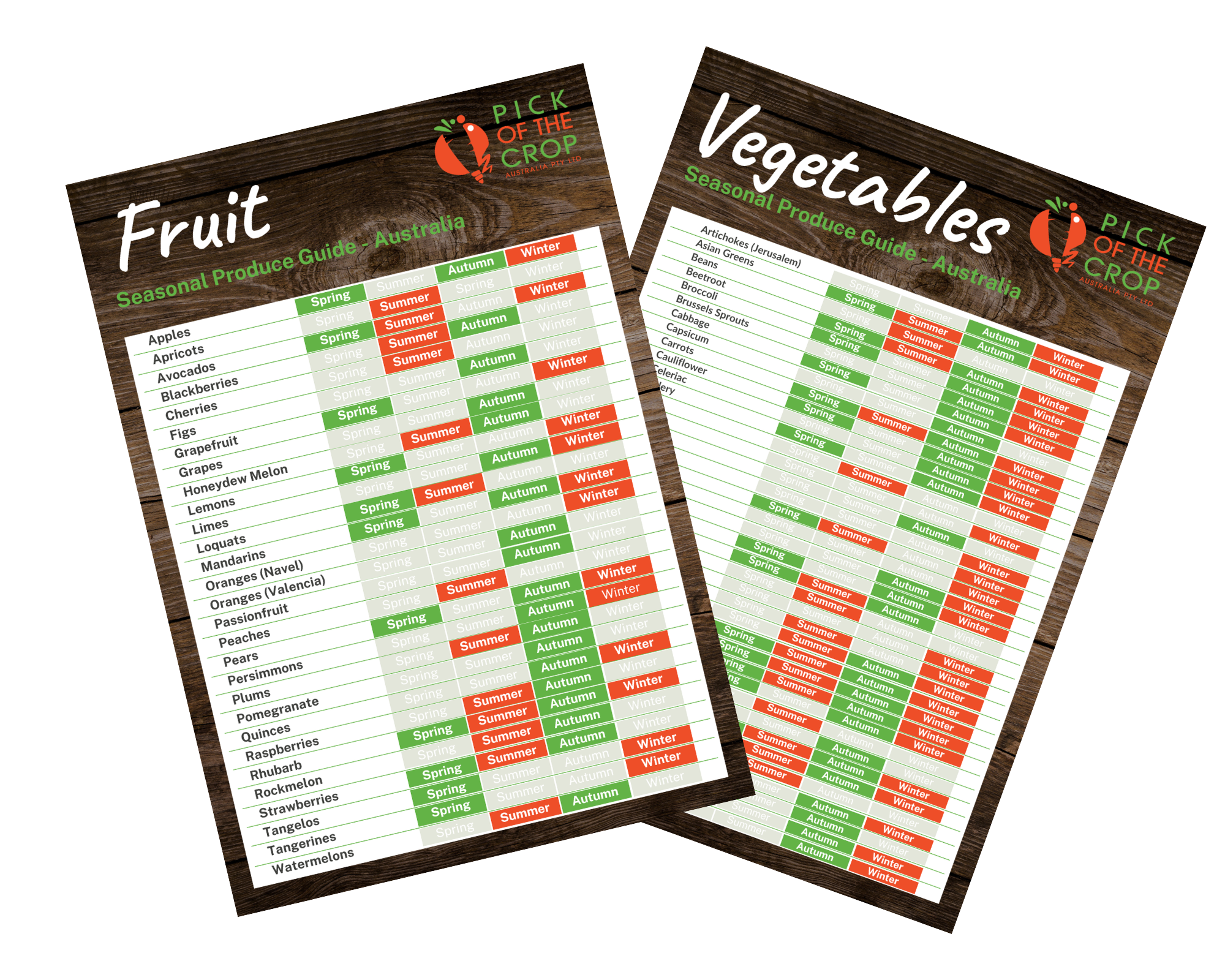
It gives you a quick guide to what's typically in season throughout the year, so the next time someone decides the new function menu absolutely must feature something wildly out of season, you have evidence.
Ask your fresh produce supplier:
What's particularly good this week?
It's a ridiculously simple question that can lead to better food and smarter buying. Your supplier is seeing what's moving through the market constantly. Use that knowledge.
And then there's the cost nobody puts next to the vegetables: the prep
A $30 box of vegetables doesn't actually cost your kitchen $30.
Someone has to deal with it.
Wash it.
Peel it.
Top it.
Tail it.
Deseed it.
Slice it.
Dice it.
Clean up after it.
And inevitably discover that someone has cut half the carrots one size and the other half another. That might be perfectly manageable in a small restaurant. But scale it across a commercial kitchen processing serious volumes of produce every week, and suddenly vegetable prep is a labour conversation.
That's why fresh-cut fruit and vegetables can make a lot of sense.
PICK OF THE CROP can supply produce whole, but we can also do a lot of the repetitive work before it reaches your kitchen.
Pumpkin diced.
Carrots sliced.
Potatoes prepared.
Vegetables chopped to specification.
Fresh produce ready to cook rather than ready to spend the next hour chopping.
You're still serving fresh vegetables.
Your chefs are simply spending less time acting as human food processors.
Think ingredients, not individual dishes
Here's another way to make seasonal menu planning work harder.
Instead of asking:
“What dish can I make with asparagus?”
Ask:
“How many ways can I use asparagus this week?”
Breakfast special with poached eggs.
Spring salad at lunch.
Risotto on the dinner menu.
Chargrilled side for functions.
Frittata for catering.
Now one seasonal purchase is earning its place across several parts of the operation.
Do the same with strawberries.
Or broccolini.
Or pumpkin.
Or whatever happens to be particularly good that week.
For high-volume kitchens, cross-utilisation can help simplify purchasing, make stock easier to manage and reduce the risk of beautiful produce slowly dying a sad death at the back of the cool room.
Nobody wants that.
Especially the strawberry.
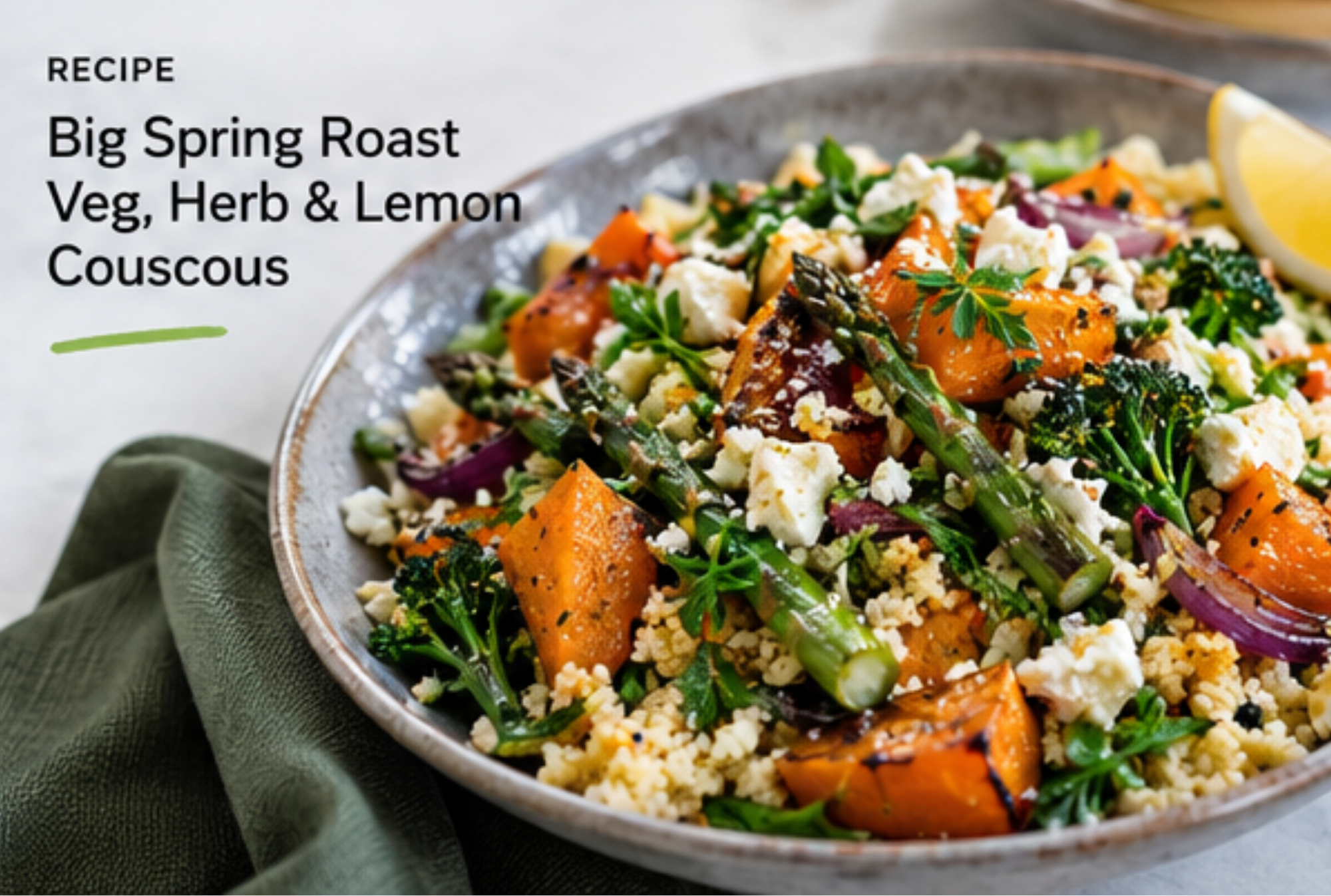
Recipe: Big Spring Roast Veg, Herb & Lemon Couscous
We promised something useful, so here's one you can actually steal.
This is designed for approximately 20 serves, scales easily, works hot or cold and uses a serious amount of fresh produce.
Even better, most of the vegetables can arrive at the kitchen already prepared.
You'll need
1.5 kg diced pumpkin
1 kg sliced carrots
1 kg cauliflower florets
750 g broccoli or broccolini
500 g asparagus, cut into pieces
500 g sliced capsicum
300 g sliced red onion
300 g baby spinach
1.5 kg couscous
1.5 L vegetable stock
250 ml extra virgin olive oil
Juice and zest of 4 lemons
2 bunches flat-leaf parsley, chopped
1 bunch mint, chopped
300 g feta, crumbled
Salt and cracked pepper
Get it done
Heat the oven to 200°C.
Spread the pumpkin, carrot, cauliflower, broccoli, capsicum and onion across lined trays. Add olive oil, season well and roast until everything is just tender and starting to caramelise.
Add the asparagus later so it keeps some bite. Nobody ordered grey asparagus.
Meanwhile, pour the hot vegetable stock over the couscous, cover and leave it to do its thing. Fluff with a fork once absorbed.
Mix the lemon juice, zest and remaining olive oil.
Fold the roasted vegetables, spinach, herbs and lemon dressing through the couscous. Finish with feta and check your seasoning.
Done.
Serve it warm alongside grilled chicken or fish, or cold as a substantial spring salad.
Want to bulk it up? Add chickpeas.
Want protein? Add chicken.
Want it vegan? Lose the feta.
Got a different vegetable looking particularly good this week? Throw it in.
That's the entire point.
Your spring menu starts at the market
Spring produce in Sydney changes quickly, and that's part of what makes this time of year so good.
Don't feel obliged to use everything.
Use what's good.
Use what's versatile.
Use what's giving you value.
And wherever possible, make one ingredient work hard enough to earn its spot in your cool room.
PICK OF THE CROP supplies wholesale fruit and vegetables to commercial kitchens across Sydney, including restaurants, cafés, caterers, clubs, aged care, healthcare and education.
We can supply produce whole, sliced, diced and prepared to suit your kitchen, because sometimes the smartest thing you can do with 20 kilos of pumpkin is let somebody else chop it.
See what's in season → Explore our DOWNLOAD HERE
Looking for a reliable fresh produce supplier in Sydney?
Talk to PICK OF THE CROP about fresh produce and prepared fruit and vegetable supply for your commercial kitchen.